

This track includes ten minutes of meditation practice; if that feels like a lot to you, maybe start at the beginning!
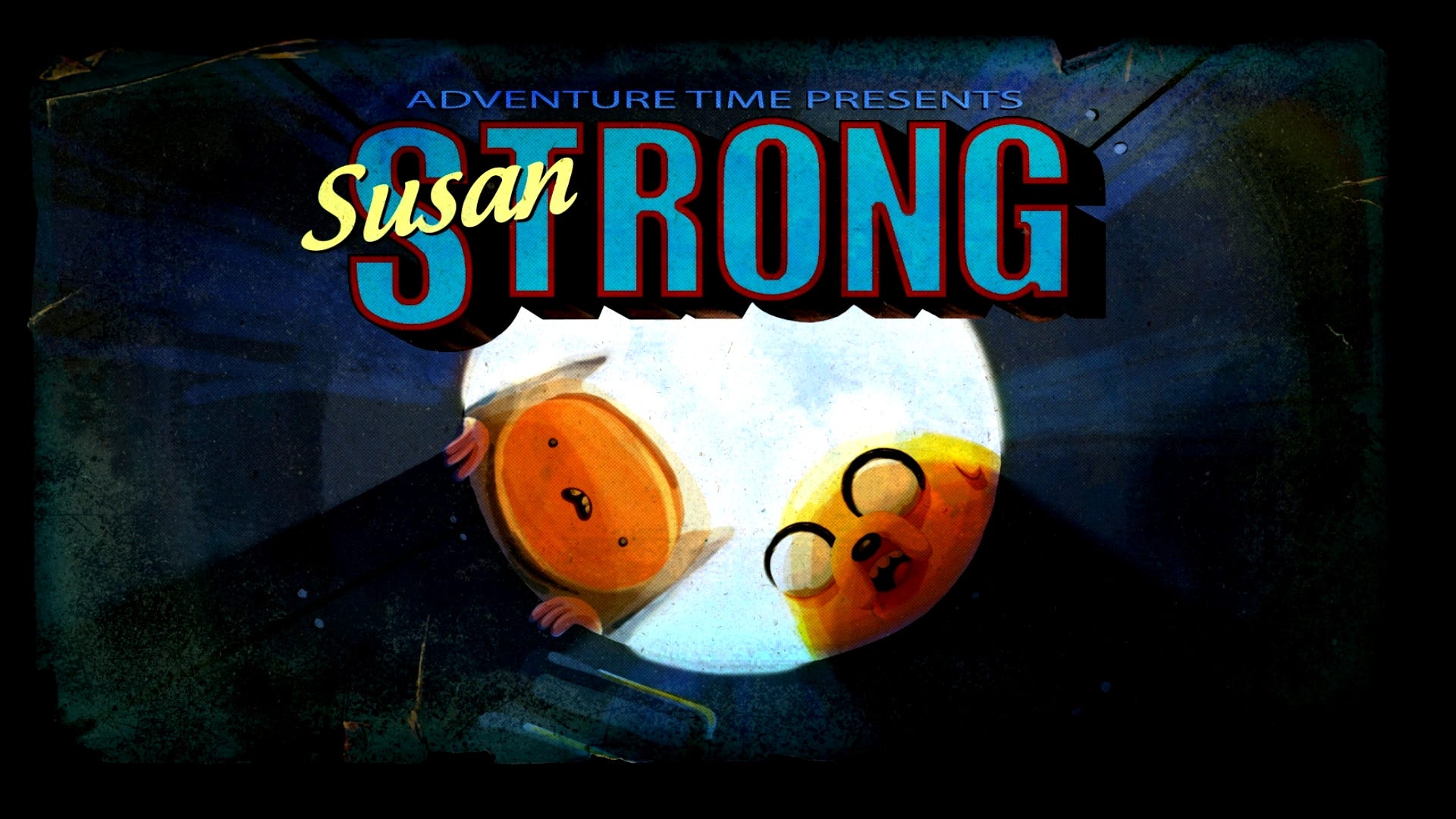
Turn on the TV, get comfy, and play this track after you’ve watched the episode: Susan Strong (Season Two, Episode Eighteen).
CW: specially for today’s pre-meditation reflection, genocide and colonialism.
Mentioned in this episode: a Papul Bull (letter from the Pope) justifying the enslavement of West Africans, the Doctrine of Discovery, language representations which stereotype Native Americans, the intentional weaponization of disease in genocidal colonization, Sylvia Wynter, and a short video about her, colonial paternalism, David Graeber and David Wengrow’s book The Dawn of Everything, including quotes from a Jesuit priest and Benjamin Franklin, and some info about Indigenous People protecting biodiversity.
P.S. If you’re curious, here you can find out why I started this project.
Recording Transcript (Meditation Begins at 10:26)
Hello again, adventurer!
It is so good to be with you.
And there’s so much to explore in today’s episode: the desire to find people “like you,” what it means to belong, how we communicate care across difference, overcoming fears to welcome newness, and the beauty contained in a moment when you realize someone that initially seemed quite different is just like you.
But there is also a lot of messiness. On full display is also the desire “to rule… like gods. Angry gods.” And references, both explicit and implicit, to “first contact” between cultures - which necessarily reminds us, or at least me, of colonialism and all the messy evils that come along with it.
Although this is a delightfully cute and funny cartoon, the realities of the questions that Finn asks throughout this episode are painfully real and consequential. Maybe some of the most real and consequential questions a person can ask: “what does it mean to be human?” To belong? Whats the difference between being “human, or just another wild animal?” And if “we’re all wild animals, brother,” what does that mean for how we relate to each other? What has it meant historically?
Okay, take a deep breath, cuz I wanna get pretty real about this for a bit - because I think the truth, even when messy, is important to look at, as honestly as we can. And I think that it is important to be honest about histories of violence and good intentions gone astray, and what those things mean about how we care. And what we care about.
It might be scary to look at these shadows, but don’t worry, we’ll talk about these things incrementally… by degrees!
(Please note that this intro is a little longer than usual, so if you’d rather read the transcript for this on Substack than hear me say it all, feel free. And I’m including lots of links and references for you to dig deeper into these histories at your own pace, but I do encourage you to do so.)
First: it matters how we think about people who are different than us.
The history of people labeling other people as backward, savage, wild animals, or any number of other demeaning things is long and messy and well-documented. The idea that there are “civilized” people, who know more, or are better than, people of other cultures (often Indigenous cultures), is the foundation of colonialism. As early as 1452, a letter issued by the Pope authorized Portugal to reduce “Saracens (Muslims) and pagans and any other unbelievers” to perpetual slavery.
This letter is a foundational text in the Doctrine of Discovery, (which is the common narrative that America was “discovered” when in fact, it was already inhabited with tens of millions of people). This Papal letter provided a religious justification for the Portuguese slave trade from West Africa, by putting non-Christian people in a firmly “different” category. And this “difference” was used to defend their complete objectification and exploitation.
The language used to describe Natives, Black, non-Christian, and other people deemed “uncivilized” were associated with stereotypes of their incompetence, their violence, their backward-ness, which ultimately, shows how words can be used as weapons that create a hierarchy, where one group is defined as superior, and another is labeled as inferior.
But on top of just words being used as weapons, colonial genocide also used real weapons. Lots of them. And in this episode Jake makes a joke about Susan1 being “felled by surface-world germs.”
And in reality, diseases introduced through colonization wiped out a majority of the Native population, but this was not always passive or incidental - with documented cases of blankets from smallpox patients being given to Native communities.
Okay, let’s pause.
“But Tiffany,” you’re thinking, “this has very little to do with today’s episode. And besides, I would never give someone a blanket infected with smallpox.”
So for the first matter: I generally agree. I don’t think the show is intentionally invoking this messy history, and I don’t think it’s wrong or bad for telling a similar story without addressing all this. But it does exist in a cultural environment which is built upon the foundations of genocide and economic exploitation. The episode does make jokes about surface germs, and ruling as angry gods, and the differences between people and wild animals with depictions of a “less-intelligent” people becoming “irrationally violent.”
But I’m not trying to “cancel” this show; I love this show. But I also think these histories are really important for us to talk about, reflect on, and learn from. And they are different than the histories I was taught as a young person.
So more to the point, whether or not the show cares about all of this: I care about these histories. And I think you should too.
And I also believe you would never give a person a smallpox infected blanket, so bear with me for the next incremental degree.
Second: how we think about who/what a human is affects all of us.
My thinking about the category of the “human” was most profoundly changed by a brilliant Jamaican thinker, writer, philosopher extraordinaire: Sylvia Wynter. I highly recommend a video I’m linking which offers a brief overview of her life and thinking. But one of the main points she makes is that what it means to be human is a particular kind of story we tell ourselves. She carefully traces the history of this story, who is included and excluded from that story, why this matters, and how it has shaped our world.
These stories of the human affect all of us. And if you aren’t thinking about these directly and critically, it means you are accepting and perpetuating the ones that are most culturally dominant.
And these are stories whose foundation is genocide, slavery, economic exploitation, and objectification.
These are stories that are worth deconstructing and reimagining, but mostly have continued uninterrupted.
Which brings us to our next, and final, incremental degree:
Third, sometimes you think you’re helping when you’re not.
Or you’re being told that someone needs your help, when maybe actually you need theirs. Or probably you both need each other.
In the cases of colonialism we’ve been exploring, this is sometimes called “paternalism.” The idea that Indigenous People need to be modernized and civilized has been used for centuries to justify conquest and domination. Some, maybe many, of the people involved in this process had really good intentions when judged from their own perspective, they thought they were helping “save” people, or helping them “learn.” But in the process, colonialism imposed its own values, way of thinking, economics, and social hierarchies onto cultures, and in the process, eliminated, minimized, or severely changed the other culture in the process.
In reality, a great deal of what we claim as democracy, freedom, or the better values of civilization actually started with, and was more successfully embodied by Indigenous civilizations.
David Graeber and David Wengrow explore this in their text, The Dawn of Everything: A New History of Humanity.
And as a couple brief examples from this text, they cite a Jesuit Priest who reflects on the Wendat people in 1644:
Or a passage by Benjamin Franklin who laments that:
when Native people are brought up in colonial culture, but then revisit their Native community, “there is no perswading [them] ever to return,” and that “when white persons of either sex have been taken prisoners young by the Indians, and lived a while among them, tho’ ransomed by their Friends, and treated with all imaginable tenderness to prevail with them to stay among the English, yet in a Short time they become disgusted with our manner of life, and the care and pains that are necessary to support it, and take the first good Opportunity of escaping again into the Woods, from whence there is no reclaiming them.”
And today, Indigenous People make up a small percentage of the world’s population, but take care of a vast majority of its biodiversity.
And all of these examples are intended to suggest that, in the long view of colonialism, the people who were often deemed backwards and “in need of help,” have in fact, been among the largest contributors to helping protect ecological balance and equitable relationships between people and the Earth.
Which is to say that it’s dangerous when we begin to think that we know what’s best for someone else. Not only because we may start to make choices on their behalf, but also because we stop listening to the things they have to teach us.
But okay. Enough out of me. “If I think about [this] too much, I get all soul search-y. And weeeeird.”
So let’s just sit and be with all the weird instead.
Mkay?
Who receives her name by Finn misunderstanding her repeating the word “sun” - as she tries to speak in Finn’s language, but he makes no attempt to speak in hers


